


Odunbaku Bacculala
In the unfolding story of Nigeria’s infrastructural rebirth, certain names are destined to be written in steel, not ink.
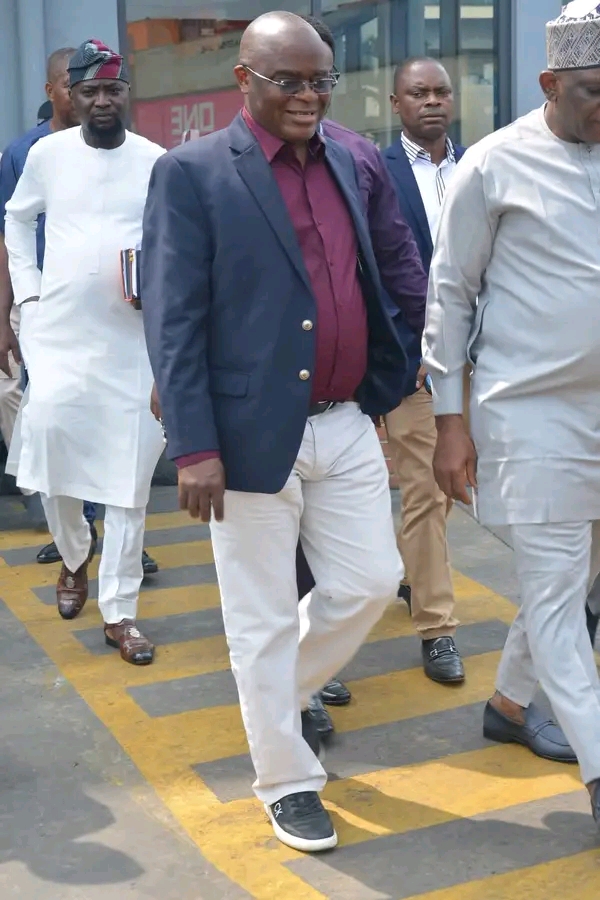
One of such names is Hon. Dr. Kayode Opeifa, the dynamic Chairman of the Nigerian Railway Corporation (NRC), whose leadership is redefining what public service means in a time of great national need.
The Nigerian railway system, once dismissed as a relic of colonial history, is today undergoing a remarkable transformation.
At the center of this quiet revolution stands Kayode Opeifa, a man whose life work reflects consistency, courage, and commitment to national progress. From his pioneering reforms in Lagos State’s transport sector, where he laid foundations for modern mobility to his role as a federal appointee shaping national transport policy, Opeifa has never been a spectator. He has always been a reformer.
Today, as Chairman of the NRC, he carries an even greater burden: to stitch together a fragmented nation with the iron threads of modern rail. And in doing so, he is proving that leadership is not about position, but about vision.
Under his guidance, the Nigerian railway is no longer just about locomotives and tracks. It has become a political statement of progress, a social project of unity, and an economic lifeline for a country that must rise from consumption to production.
Politically, Opeifa represents loyalty and service to the nation above self. He is a reminder that governance, when anchored on competence and patriotism, can still restore the people’s faith in democracy.
Economically, the reviving rail lines are reducing transport costs, easing pressure on highways, and unlocking opportunities for industries and agriculture alike.
Socially, rail is reconnecting communities, bridging distances, and proving that the Nigerian dream is still alive.
What makes Opeifa’s leadership extraordinary is not only the progress visible on the ground but the passion that drives it. He does not see railways as mere steel and machinery; he sees them as the backbone of national rebirth, carrying not just goods and services but also the hope of millions.
Yet beyond his national service, Lagos State, the land where he first distinguished himself, cannot afford to overlook his expertise and experience.
Opeifa’s political journey is inseparable from Lagos’ modern success story. He was part of the bold vision that transformed Lagos transportation, bringing order where there was chaos, structure where there was decay, and innovation where there was stagnation.
As Lagos looks ahead to the future towards deeper urban renewal, smarter infrastructure, and inclusive governance, it needs men who are not just politicians, but visionaries. Men who combine technical mastery with political loyalty, governance experience with grassroots credibility. In Kayode Opeifa, Lagos has such a man.
His record at the federal and national level has only sharpened his competence and broadened his vision. But Lagos remains his home base, his political crucible, and the arena where his wealth of expertise is still most needed.
The future political terrain of Lagos is not one for experiments; it demands tested hands like Opeifa, who can speak the language of reform while understanding the realities of governance.
History will not forget the man who, at a time of doubt and cynicism, put steel back into Nigeria’s journey to nationhood.
But Lagos, too, must remember that men like Kayode Opeifa are not just assets to be celebrated; they are leaders to be deployed.
For while the trains move across Nigeria, Lagos must ensure that Opeifa’s ideas, energy, and political will continue to move its own future.
