


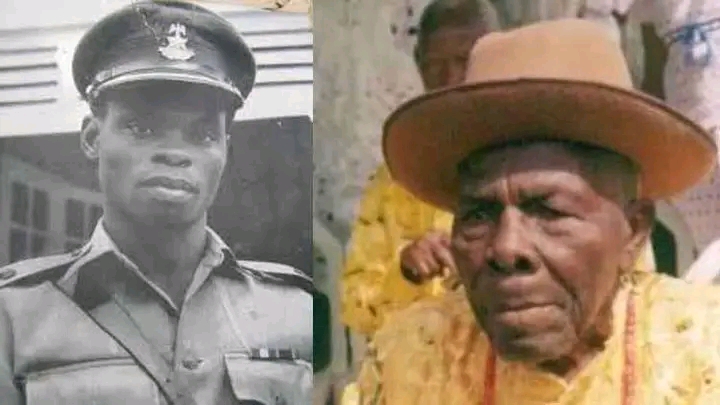
What does it take to lead a nation’s army through the birth pains of a young republic and turbulent coups?
For Nigeria, one of the figures who quietly but profoundly shaped its military history was Major General David Akpode Ejoor (1932–2019).
Born in Ovu, Delta State, Ejoor enlisted in the Nigerian Army in 1953 and was commissioned three years later after training in Ghana and at the prestigious Royal Military Academy, Sandhurst.
From his early days, it was clear he had the discipline, intellect, and vision to rise to the top.
He first took on national responsibility as Military Governor of the Mid-Western Region (1966–1967), navigating a region on the brink of the civil war with firm leadership.
Later, he became the first Nigerian Commandant of the Nigerian Defence Academy (1969–1971), molding a generation of officers who would lead the nation through its most challenging times.
Ejoor reached the pinnacle of his career as Chief of Army Staff (1971–1975), overseeing the Nigerian Army during a critical period of consolidation and post-civil war rebuilding.
His tenure was marked by professionalism, discipline, and a vision of a united, capable army.
Even after retirement, he remained a pillar of his community, serving as President-General of the Urhobo Progress Union and holding chieftaincy and honorary titles.
His life reflected a rare blend of military precision and civic leadership.
Legacy: Major General David Ejoor was more than an army officer; he was a builder of institutions, a shaper of minds, and a guardian of national unity.
His story reminds us that leadership is often about the structures you leave behind, not the headlines you make.
©️Heart 2 Heart With Sammy
