


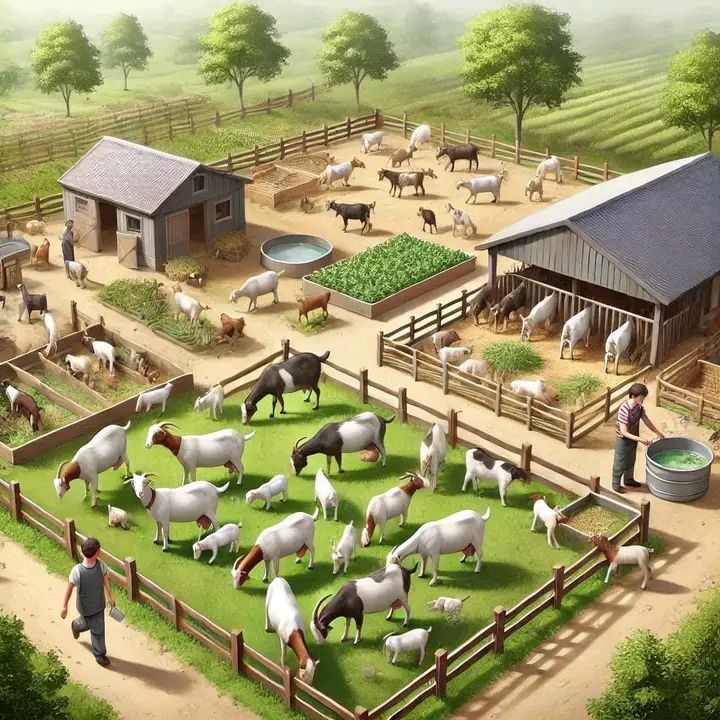
A Profitable and Sustainable Livestock Option
Goat farming has become an increasingly popular agricultural practice due to its numerous benefits. Whether for small-scale farmers or large commercial ventures, raising goats is a practical and profitable investment. Goats require less feeding, minimal space, and low maintenance, making them an ideal choice for many farmers. Additionally, their resilience to climate change, disease resistance, and high market demand make goat farming a sustainable source of income. Below are the key reasons why goat farming is a smart agricultural venture.
- Feeding Needs Are Less
One of the biggest advantages of goat farming is low feeding costs. Goats are known for their ability to thrive on a variety of vegetation, including grasses, shrubs, and agricultural by-products. They can graze on land unsuitable for other livestock and efficiently convert low-quality feed into milk and meat. This makes them an economical choice compared to cattle or poultry. - Minimal Space Is Required
Unlike cows or buffaloes, goats require less space for housing and grazing. A small piece of land is sufficient to rear multiple goats, making it an excellent option for farmers with limited land resources. Additionally, goats adapt well to stall feeding (zero grazing) systems, further reducing space requirements while ensuring better management. - Multipurpose Usage: Milk and Meat
Goats are dual-purpose animals, providing both milk and meat. Goat milk is highly nutritious, rich in essential vitamins and minerals, and is easier to digest than cow’s milk. It is also used in making cheese, yogurt, and medicinal products. Goat meat (chevon) is in high demand globally due to its low fat and high protein content, making it a healthy alternative to other red meats. - Low Maintenance
Goats are easy to manage compared to other livestock. They require less veterinary care, as they are naturally resistant to many diseases. Unlike cattle, goats
