



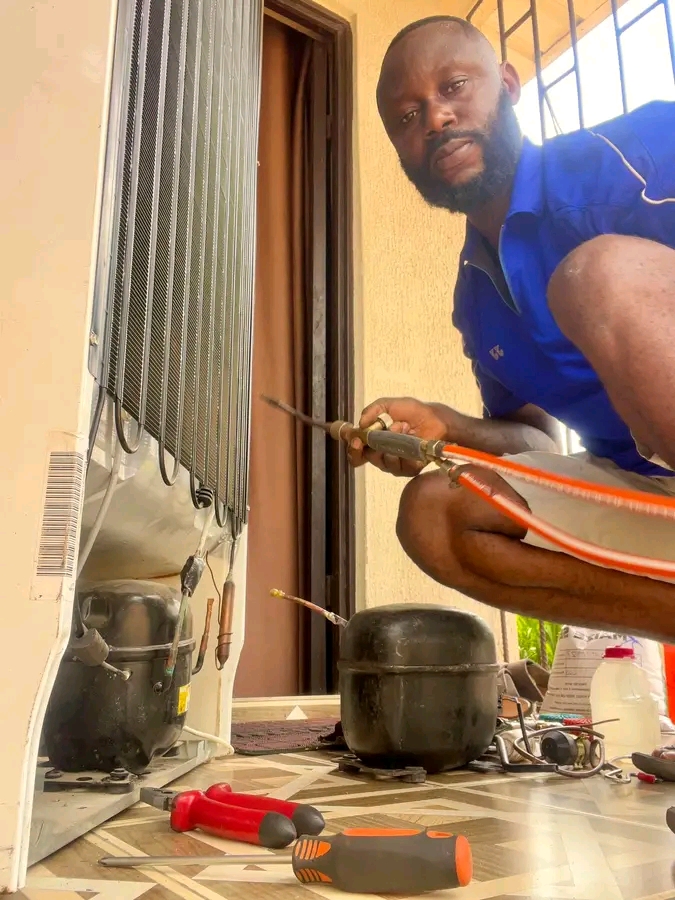
DO YOU KNOW ?
Not all the time that your refrigerator stops working is because of refrigerant (gas) shortages !
Here’s a more detailed breakdown:
- Proper Ventilation and Placement:
Clearance:
Ensure adequate space around the refrigerator (at least 3/8-inch on the sides and 1-inch in the back) to allow for proper airflow and cooling.
Vent Blockages:
Make sure vents inside the refrigerator and freezer are not blocked by food or items, which can restrict airflow and prevent the fridge from cooling effectively.
- Condenser Coils and Cleaning:
Location:
Condenser coils are typically located at the back or bottom of the refrigerator (or freezer).
Cleaning:
Regularly vacuum or clean the condenser coils to remove dust and debris, which can hinder their ability to dissipate heat and reduce cooling efficiency.
Frequency:
Clean the coils at least once or twice a year, or more often if you live in a dusty environment. - Door Seals and Gaskets:
Check for Damage:
Inspect the door seals (gaskets) for cracks, tears, or damage, as these can allow cold air to escape and cause the refrigerator to work harder.
Clean Seals:
Clean the door seals regularly with a mild soap and water solution to remove any buildup of dirt or debris.
Ensure Proper Closure:
Ensure the door closes tightly and that there are no obstructions preventing it from closing properly. - Temperature Settings and Thermostat:
Check Settings:
Verify that the temperature settings are appropriate for the desired cooling level.
Adjust Thermostat:
If the refrigerator is not cooling properly, check the thermostat and adjust it to the correct temperature setting.
Avoid Overloading:
Do not overload the refrigerator with food, as this can restrict airflow and prevent it from cooling - Other Potential Issues:
Power Supply:
Ensure the refrigerator is properly plugged in and that the power outlet is working correctly.
Compressor:
If the refrigerator is not cooling, check to see if the compressor is running and that there are no unusual noises coming from it.
Evaporator Fan:
If the refrigerator has an evaporator fan, make sure it is working properly and that the blades are not clogged with ice or debris.
Call for Professional Help:
If you have tried these troubleshooting steps and the refrigerator is still not cooling properly, it may be time to call a qualified repair technician.
😊💯✅👌